







The Ultimate Course on Missing Data Imputation in R
All you need to know to handle missing values
without wasting time on unnecessary talk.

Price: $350
Complete this course at your own pace! Upon enrollment, you can
start learning immediately without being tied to a fixed schedule.

Why Proper Handling of Missing Data is Essential
Missing data is a common challenge in data analysis, and ignoring it can lead to biased results and unreliable conclusions. Properly addressing missing data is essential to ensure the accuracy and integrity of your analyses.
R provides powerful tools and techniques for handling missing data, ranging from simple methods to advanced imputation approaches. Mastering these techniques allows you to manage missing data effectively, preserving valuable insights and minimizing potential errors.
This course will teach you how to effectively assess and manage missing data using R, enabling you to make reliable, data-driven decisions in your projects.
This course teaches you how to handle missing data like an expert, step-by-step.
- Even if… you’re stepping into missing data imputation with no prior experience.
- Even if… you know the missing data basics but find advanced imputation overwhelming.
- Even if… you’re a beginner in R and feel intimidated by its syntax.
- Even if… you’ve thought to yourself, “imputing missing data in R is too complicated for me.”
What You Get
Master the principles of missing data imputation in R with our interactive online course! Learn through self-paced videos that guide you step-by-step from the fundamentals to advanced imputation techniques. Strengthen your skills with engaging quizzes designed for all experience levels, and connect directly with the Statistics Globe team and fellow learners in the exclusive comments section on the Statistics Globe website, where you can share code, upload images, and ask questions.
The course follows a well-structured 12-module program and includes several bonus modules that deepen specific subtopics. You get lifetime access to all videos, R code, and resources, allowing you to learn fully at your own pace. After completing the course, you can return to the material at any time and continue using the comments section for questions, discussion, and networking.
By the end of the course, you’ll have a deep understanding of missing data imputation in R and the practical expertise to apply these techniques confidently in your projects. You’ll also receive a certificate of completion to recognize your achievement.
Here are more details on the course structure!


A Peek Inside the Course
Explore our comprehensive online course on missing data imputation in R, featuring easy-to-follow modules that focus on practical skills and hands-on learning!
You’ll be guided step-by-step through the core concepts of handling missing data and learn advanced imputation techniques in R using clear explanations and real-world examples. Each lesson focuses on practical application to help you confidently manage even complex missing data challenges.
The course enhances your expertise in missing data imputation while also strengthening your overall knowledge of R programming, statistical modeling, and data preparation — essential skills for advancing your data analysis career. Whether you’re new to R or refining advanced techniques, this course will help you reach the next level.
Throughout the course, you’ll explore key R packages for handling missing data, with a primary focus on the widely trusted mice package. By mastering its state-of-the-art imputation methods, you’ll be able to apply expert-level techniques and clearly communicate your results to colleagues and stakeholders.
Here’s the table of contents for the entire course! Each topic includes video lessons, exercises ranging from simple to advanced, and additional learning materials to support your progress.
Table of Contents
- Module 1) Course Structure & About the Instructor [Free Preview]
- Module 2) Missing Data Basics
- Module 3) Handling Missing Data in R
- Module 4) Simple Missing Data Imputation Techniques [Free Preview]
- Module 5) Advanced Imputation of Numerical Data
- Module 6) Advanced Imputation of Categorical Data
- Module 7) Variable Selection for Imputation Models
- Module 8) Single vs. Multiple Imputation
- Module 9) Longitudinal & Clustered Data
- Module 10) Evaluating Imputation Quality
- Module 11) Sensitivity Analysis
- Module 12) Summary & Further Resources
Get an overview of the course layout, goals, and resources. Learn how to make the most of the materials and community features, and get background information about your instructor, Joachim Schork.
Explore the sources of missing data, understand response mechanisms (MCAR, MAR, MNAR), learn why imputation is essential, and review its key assumptions with an introductory example in R.
Learn how to identify and visualize missing data in R, uncover patterns of missingness, and apply elementary techniques such as listwise deletion.
Discover foundational imputation methods such as mean, median, and mode imputation, and understand their limitations to avoid common mistakes when working with missing data.
Dive into advanced techniques like regression imputation, predictive mean matching, and random forest imputation to handle numerical missing data effectively.
Master methods for imputing categorical data, including logistic regression, polynomial regression, random forest imputation, and hot deck imputation.
Learn which types of variables should be included in imputation models and how to select them effectively using the quickpred() function and advanced automatic selection methods.
Compare single and multiple imputation, explore the benefits of multiple imputation, and follow a clear step-by-step workflow for implementing it effectively in R.
Discover how to handle missing data in repeated-measures and clustered data structures, and adapt imputation models for complex study designs.
Evaluate the success of your imputations through numerical analysis and visualization techniques to ensure reliability and accuracy of your imputed data.
Test how robust your results are to different imputation assumptions and model specifications by comparing how these variations influence your final outcomes.
Review key takeaways, explore advanced references, and get recommendations for extending your knowledge beyond this course.

Bonus Modules
In addition to the 12 core modules outlined above, the course includes several bonus modules that deepen specific subtopics. You can find them below.
- Data Amputation
- Nonlinear Nonparametric Statistics (NNS) Imputation
- k-Nearest Neighbor (kNN) Imputation
- The Energy-I-Score
Learn how to deliberately introduce missing values into complete data sets to simulate realistic missingness scenarios. This module shows how to generate controlled missing data patterns using the ampute() function from the mice package in R.
Explore NNS-based imputation that captures nonlinear and complex relationships without relying on parametric model assumptions. This module explains how NNS imputation works and how to apply it in R using the NNS package.
Understand how kNN imputation fills in missing values using similarity between observations. You will learn how to apply kNN imputation in R and assess its strengths and limitations in practice.
Learn how to evaluate imputation quality using the Energy-I-Score, a distribution-based metric for comparing observed and imputed data. This module explains the intuition behind the score and shows how to apply it to assess and compare different imputation methods.

Love It or Return It: 30 Days Money-Back Guarantee
Your purchase is absolutely risk-free with our straightforward money-back guarantee! We are confident that our course will not disappoint you.
However, if you don’t like what you see, you can get a 100% refund up to 30 days after purchase.
Meet Your Instructor: Joachim Schork

Hey, I’m Joachim Schork and back in the days, when I started my journey as a programmer and statistician, tasks like handling missing data in R felt like an impossible challenge to me.
After finishing my bachelor’s degree in Educational Science, I decided to focus more on programming and statistics, but when I started my master’s in survey statistics, I felt hopeless. Do you know that moment when you scream at your PC screen after several hours of unsuccessful coding attempts?
Since the start of my educational journey, I have used online resources to complement the university’s official learning materials. This has helped me a lot, but at the same time I felt like I was often spending too much time on a video or blog article because many of these resources don’t get straight to the point.
This was one of the reasons why I founded Statistics Globe more than eight years ago. Meanwhile, I had completed my master’s degree, got my first job at a national statistical institute in Europe, and was rewarded with an EMOS certificate that approves special knowledge in the field of official statistics. I had gained extensive knowledge in the area that I wanted to pass on.
However, I didn’t want to create endless tutorials that didn’t fulfill the needs of its users. Instead, I created straightforward content designed to guide users to solutions for their problems as quickly as possible.
Now, eight years later, Statistics Globe has gained:
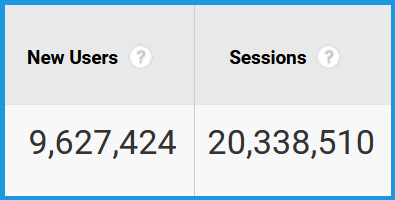
20 million clicks
on the website
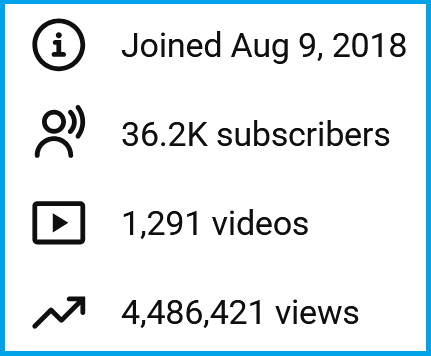
4 million clicks
on YouTube videos
200 thousand followers
across Social Media platforms
- 36,213 YouTube Subscribers
- 70,694 Facebook Group Members
- 45,114 LinkedIn Followers
- 20,482 X (Formerly Twitter) Followers
This is such an incredible success, and I’m so thankful to everybody who participated in this journey! And please don’t get me wrong: I don’t want to brag about these numbers, but I think they can show you that my content works.

This course is a big milestone for me, as missing data is the topic I’ve spent the most time working on throughout my professional career, and I’ve always wanted to create a dedicated course about it. I love exchanging with other data enthusiasts, and I am looking forward to our discussions in our exclusive comments section. I promise that I will invest all my passion and a lot of time into this course to make it an outstanding experience for all of us.
I’m not the only one who will support you in this course, though! The entire Statistics Globe team is ready to answer your questions, no matter if you have problems understanding any of the lessons or exercises, or if you have technical issues with the R software, the example data, or the add-on packages we’ll use in the course.
At this point, I want to express my profound appreciation to all the team members at Statistics Globe for their tremendous support in developing this online course. Special thanks to Micha Gengenbach for his exceptional contributions. His efforts were crucial to the success of this course.
If you have further questions or anything else you would like to talk about, feel free to email me at joachim@statisticsglobe.com, write me via the contact form, or send me a message via my Social Media channels.
My Background in Missing Data Imputation with R
Missing data imputation in R is the topic I’ve worked on the most throughout my entire career! Already during my master’s program in survey statistics, I attended specialized lectures on missing data imputation and went on to write my master’s thesis on Handling Implausible Values due to Missing Data Imputation.
Later, I worked at a National Statistical Institute, where I contributed to the imputation of missing data for various social surveys, including the Labor Force Survey, EU-SILC, and the Tourism Survey. During this time, I also authored an extensive working paper titled Automatic Variable Selection for Imputation Models. More recently, I worked on a large consulting project where we developed an R package to provide a standardized missing data imputation process for various types of data sets of a client, including automated reporting to evaluate the quality of the imputations.
Drawing from my experience across various subtopics of missing data imputation and working with missing data in diverse types of data sets, I am confident in my expertise on this topic and excited to share my knowledge with you in this course. My goal is to guide you through the complexities of missing data imputation and help you apply these techniques effectively in your own projects.
Clicking this button will direct you to the checkout page, where you can enroll in the online course. I’d be honored to have you in the course and start learning together. 🙂

10 Comments. Leave new
Nous sommes des francophones comment peuvent suivre les cours en français
Hi Moussa,
Thank you for your kind comment. Unfortunately, all my courses are currently available only in English. However, I plan to add French subtitles in the future. I’ll keep you updated.
Best regards,
Joachim
Approximately how long are the modules?
Hi Mike,
Thanks for your comment and your interest in the course. The modules vary in length, but in total there will be about 7 hours of video material. All content modules include exercises with solutions, and there will also be several bonus sections.
Let me know if you have any other questions.
Regards,
Joachim
Hi Joachim, I’m very interested in joining the workshop, but I currently don’t have the availability to attend the sessions live. I’d like to ask:
Will the classes be recorded and available for later viewing?
Would it be possible to receive an invoice for the course fee so I can request funding?
Best regards,
Lucas
Hi Lucas,
Thank you for your kind comment and your interest in the missing data course. No worries at all if the schedule doesn’t fit your availability. All lectures come as pre-recorded videos, and you will get lifetime access to the full course content. You can work through everything at your own pace and revisit any part whenever you want.
You can also receive an invoice. After registering, you can download it directly from Gumroad (the payment provider that handles the course payment).
If you have any other questions, feel free to let me know. I’d be happy to have you in the course.
Best regards,
Joachim
Hola puedo pagarlo en cuotas?
Hi Ricardo,
Thank you for your interest in the course. We can split the payment into two installments. I’ll send you an email with the details.
Looking forward to having you in the course.
Regards,
Joachim
Excellent, I love to participate. Isn’t there a discount for low-income countries?
Hi Muhammed,
Thanks for your interest, I’m glad to hear that you would like to participate.
Unfortunately, there is currently no discount available for low income countries.
Please let me know if you have any further questions.
Regards,
Joachim